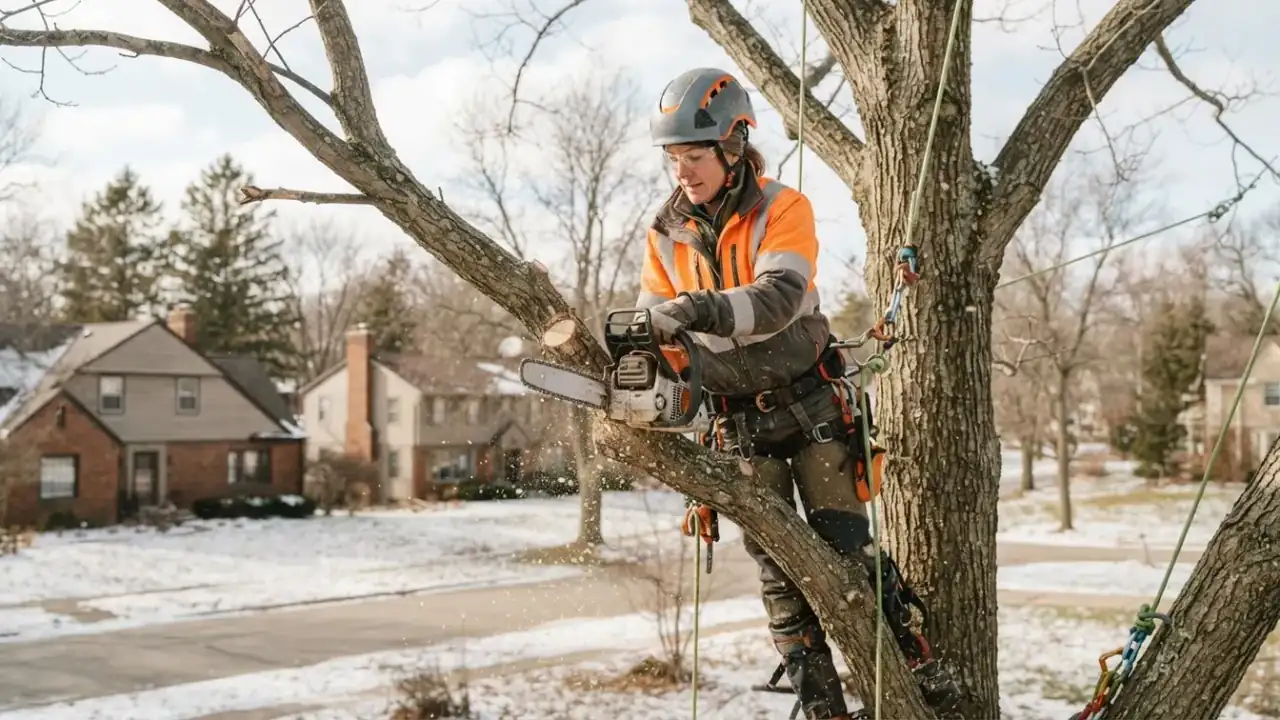
Winter tree preparation Health District MI is the process of protecting trees from the harsh conditions of winter, including cold temperatures, ice, snow, and wind damage. Proper winter tree preparation helps reduce stress on your trees, prevents breakage, and supports their health through the cold months.
This post covers the timing for winterizing trees in Jackson, best practices for winter tree care, common winter tree problems in the Health District, mistakes to avoid, and when to seek professional help. Following these guidelines will keep your trees strong and healthy year-round.
What is Winter Tree Preparation in Health District MI?
Winter tree preparation Health District MI is a seasonal tree care routine that involves pruning, protecting, and inspecting trees before the onset of freezing weather. It is necessary because Jackson winters regularly drop below 20°F, with ice storms and heavy snowfalls that can cause limb breakage and trunk damage.
Winterizing trees Health District Michigan includes removing weak branches, applying mulch to insulate roots, and sometimes wrapping trunks to prevent sunscald and frost cracks. This preparation helps trees survive the winter and emerge healthy in spring.
Many homeowners in the area rely on Tree Service in Jackson, Michigan to ensure their trees receive the right winter protection tailored to local climate conditions and tree species.
When Should You Winterize Trees in Health District MI?
The ideal time for preparing trees for winter Health District Michigan is late October through early November. This timing allows trees to enter dormancy before freezing temperatures become frequent.
Winterizing trees too early can interfere with the natural hardening process, while waiting too long increases the risk of damage from early frosts or ice storms. In Jackson, the first frost typically occurs around October 15, and sustained freezing temperatures start in November.
Applying mulch around the base of trees should be done just before the ground freezes to maximize insulation benefits. Pruning and trimming are best completed before mid-November to avoid exposing fresh cuts to harsh winter weather.
Best Practices for Winter Tree Care in Health District Michigan
Effective winter tree preparation Health District MI involves several key steps tailored to the local climate and tree species common in Jackson.
1. Pruning and Trimming
Prune dead or weak branches to prevent breakage under snow and ice weight. Proper pruning reduces the risk of damage during storms and improves tree structure.
For complex pruning needs, professional Tree Trimming and Pruning Jackson MI services can identify hazardous limbs and ensure cuts promote healthy growth.
2. Mulching
Apply a 3-4 inch layer of organic mulch such as wood chips or shredded bark around the root zone, extending 2-3 feet from the trunk. Mulch stabilizes soil temperature and moisture, protecting roots from freeze-thaw cycles common in Health District winters.
3. Watering
Trees need adequate moisture going into winter. Water deeply once or twice in late fall if rainfall is below 1 inch per week. This hydration helps trees endure dry winter air.
4. Wrapping and Protection
Wrap young or thin-barked trees with breathable tree wrap or burlap to prevent sunscald and frost cracks caused by fluctuating winter temperatures. Avoid plastic wraps that trap moisture and promote decay.
5. Inspecting for Disease and Pests
Check for signs of disease or pest infestation before winter sets in. Treating issues early with Tree Health and Disease Management Jackson MI services can prevent problems from worsening during dormancy.
6. Clearing Snow and Ice
After heavy snowfalls, gently brush off snow from branches to reduce limb stress. Avoid shaking branches aggressively, which can cause breakage.
Common Winter Tree Problems in Health District Michigan
Several issues frequently affect trees during Jackson winters, requiring specific preparation and care.
- Ice Damage: Ice accumulation adds significant weight to branches, often causing them to snap. Trees with poor structure or previous damage are most vulnerable.
- Frost Cracks: Rapid temperature changes cause bark to split, exposing inner wood to infection.
- Sunscald: South- and southwest-facing bark can heat up on sunny winter days and freeze at night, damaging tissues.
- Root Damage: Prolonged freezing without insulating mulch can harm shallow roots, especially on young trees.
- Winter Desiccation: Dry winter winds draw moisture from needles and leaves, leading to browning and dieback.
These problems are common in the Health District's older neighborhoods, where mature trees often lack recent maintenance. Residents often seek Health District tree winter protection to mitigate these risks.
What to Watch Out for During Winter Tree Preparation
Several mistakes can undermine your winter tree preparation efforts in Health District Michigan.
- Pruning too late in the season can stimulate new growth vulnerable to frost damage.
- Using improper wrapping materials like plastic can trap moisture and cause bark rot.
- Applying mulch too heavily against the trunk invites rodent damage and fungal growth.
- Neglecting to inspect for disease or pest issues before winter lets problems worsen unseen.
- Overwatering before freeze-up can saturate soil, increasing root damage risk.
Careful attention to these details improves tree survival and reduces costly winter damage repairs.
When to Call a Professional for Winter Tree Preparation
If your trees show signs of disease, structural weakness, or damage from previous storms, professional help is critical before winter arrives in Health District MI. Complex pruning, cabling, or removal of hazardous limbs requires expertise and specialized equipment.
Apex Haul offers Emergency Tree Services Jackson MI and scheduled winter care to protect your property from winter tree hazards. Our team can assess tree health, perform safe pruning, and install protective measures tailored to Jackson's climate.
Frequently Asked Questions about Winter Tree Preparation in Health District MI
How do I prepare trees for winter in the Health District MI?
Prepare trees by pruning dead branches, applying mulch, watering before freeze-up, and wrapping vulnerable trunks between late October and early November.
Are emergency winter tree services available in Health District?
Yes, emergency winter tree services Health District MI are available for storm damage, fallen limbs, and hazardous tree removal to protect your property year-round.
What are common winter tree problems in Health District Michigan?
Common problems include ice damage, frost cracks, sunscald, root damage, and winter desiccation caused by fluctuating temperatures and harsh weather.
When should I winterize my trees in Health District MI?
Winterize trees from late October through early November, before the first sustained freeze and heavy snowfall typically begin in Jackson.
Can I winterize trees myself or should I hire a professional?
Basic winterizing like mulching and light pruning can be DIY, but hazardous tree removal or disease treatment requires professional services to ensure safety and effectiveness.
Get Help with Tree Service in Jackson
For reliable winter tree preparation Health District MI, contact Apex Haul. Our team provides affordable winter tree preparation Health District MI tailored to local conditions.
Call us at 517 517 517 for expert assistance with your trees this winter.